Case Study
One ERP, four jobs to do
Role-based design for UK SMEs — live at zendrapp.com.
See it live ↗Context
UK SMEs were juggling separate tools for billing, inventory, staff, and B2B orders. Zendr unified them under one modular, pay-as-you-go platform. The design problem: "unified" usually means "cluttered." Four roles needed four different products that still felt like one.
The insight that shaped everything
Interviews with 20+ SME owners revealed the recurring pain wasn't missing features — it was not knowing what state anything was in: payments, stock, staff hours. That drove a status-first dashboard language across every module, and it meant designing the role and permission system (RBAC) before any screen.
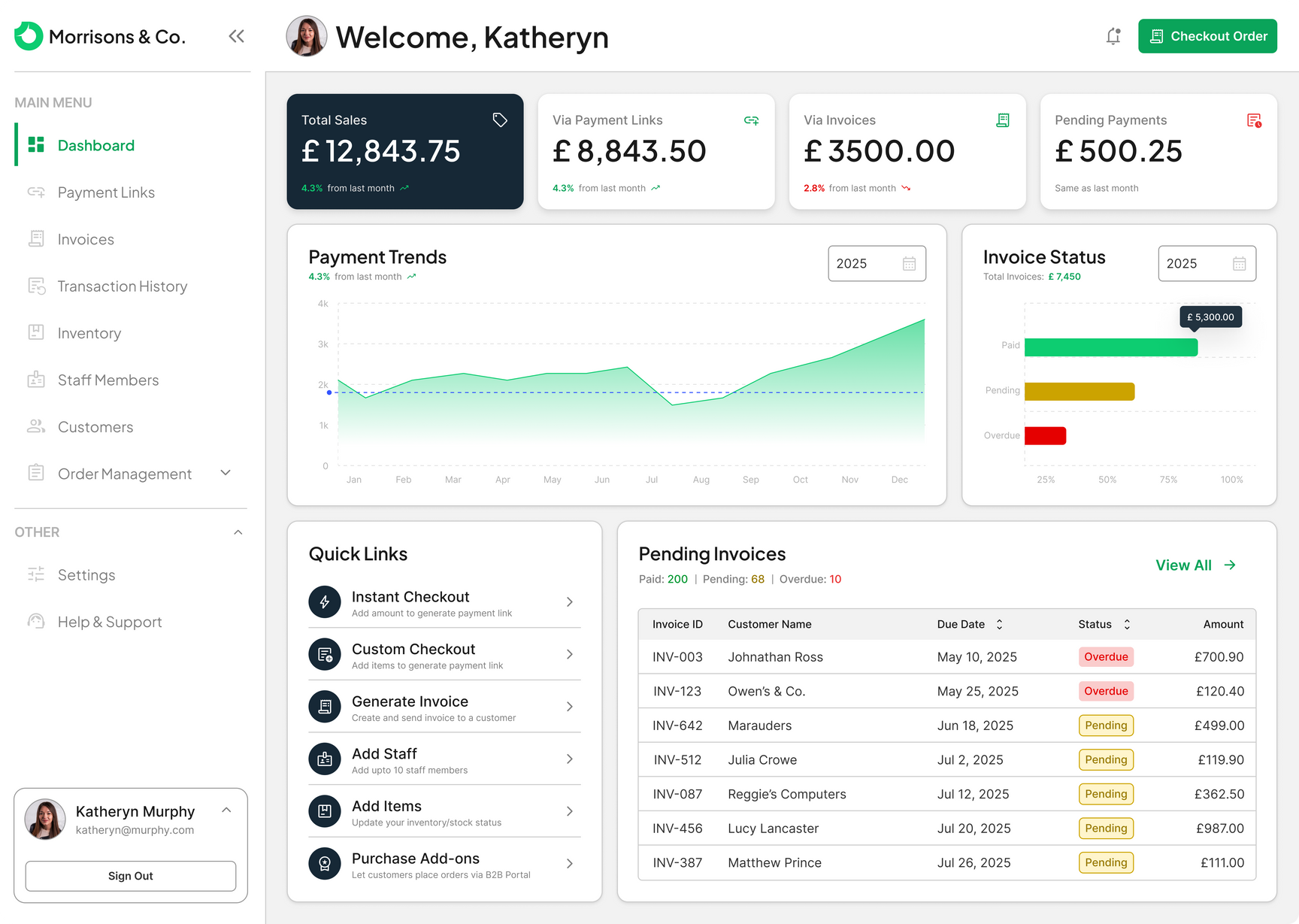
- Modular dashboards per role: a Merchant's first screen answers "how is my money"; a Staff member's answers "what do I do next."
- MVP scoped to five modules: Inventory, Staff, Orders, Billing, Add-ons.
40%
faster onboarding
25%
fewer setup errors
Quote-to-order: two workflows, one truth
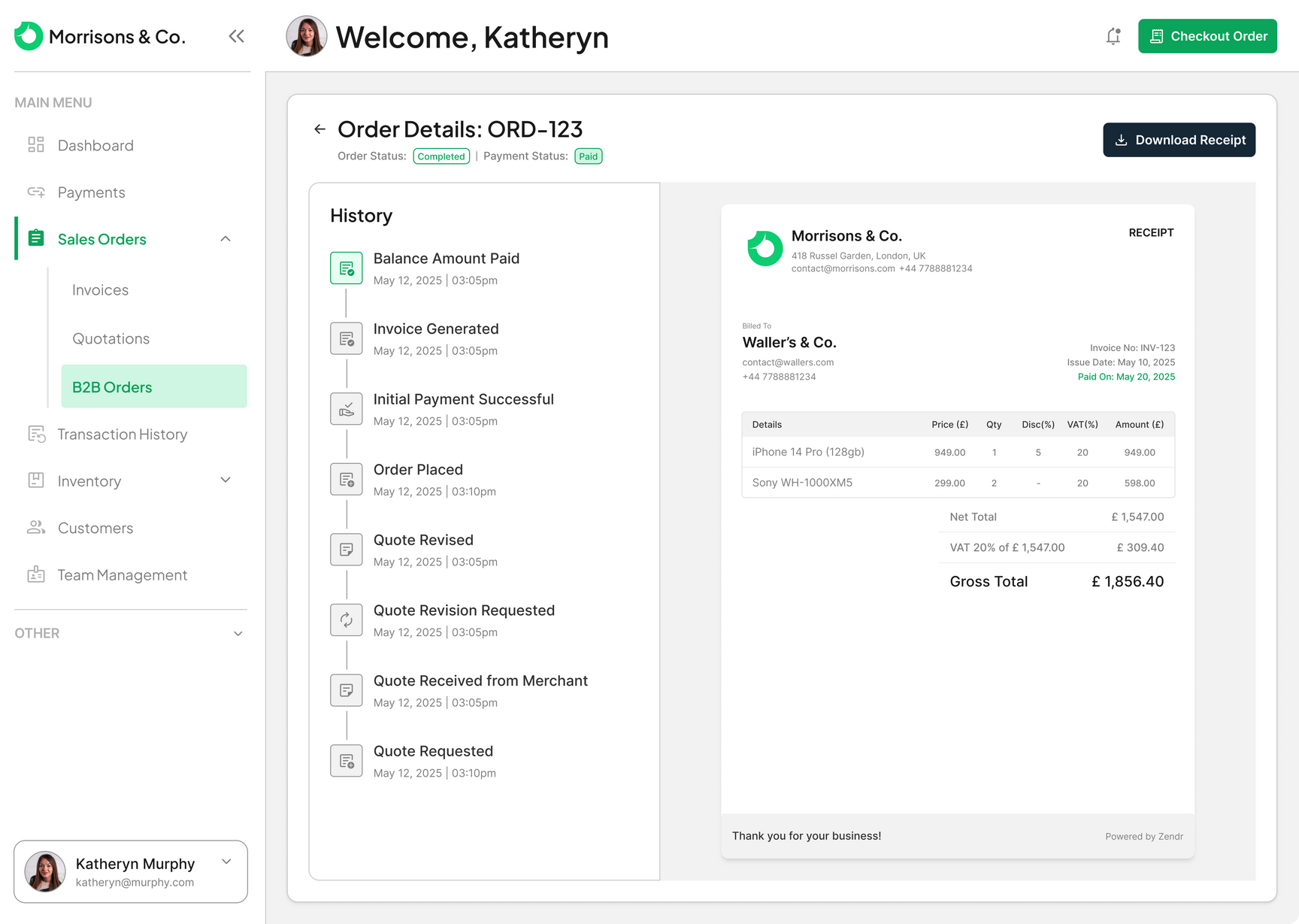
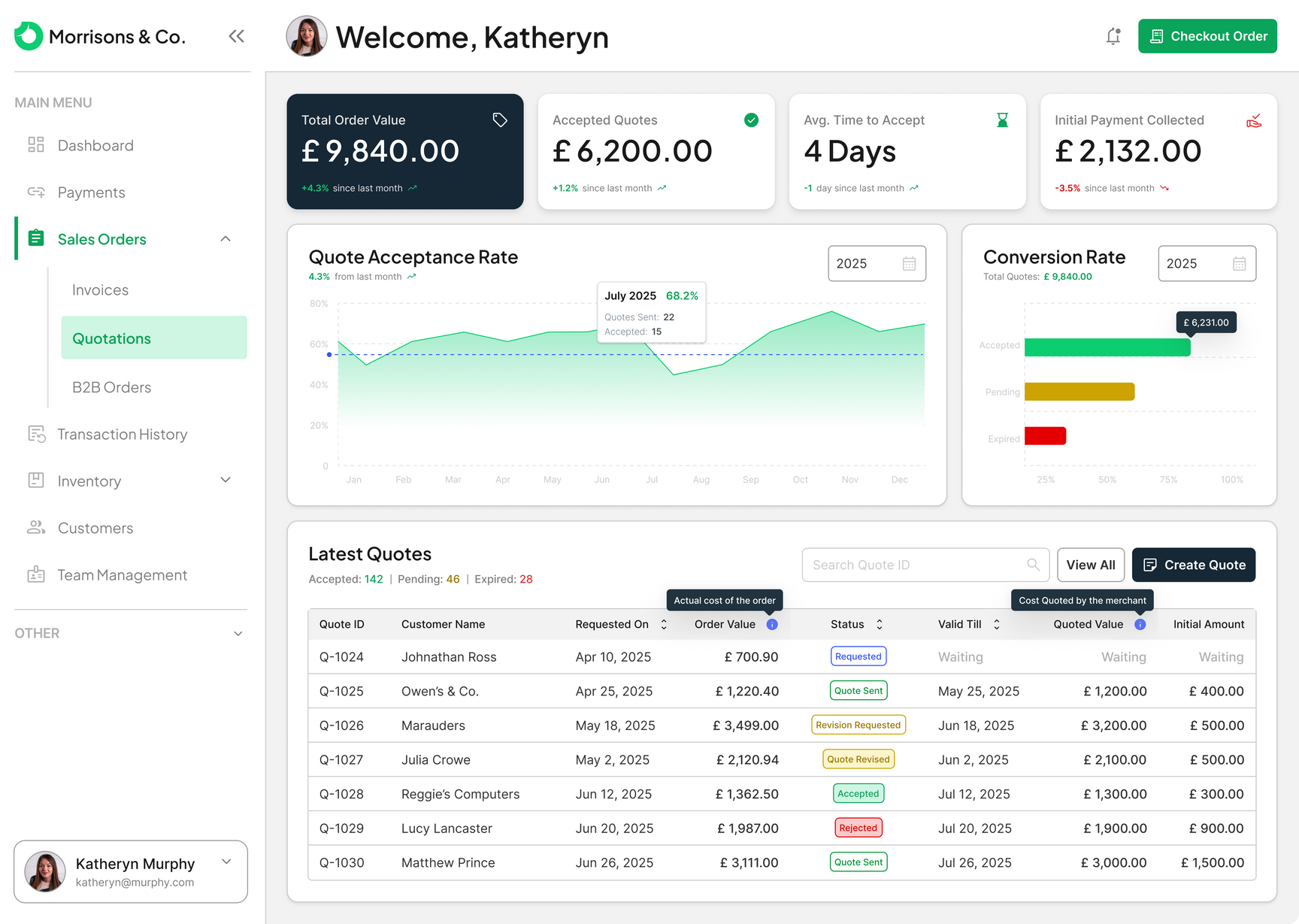
Early merchants' loudest complaint: nobody knew where a deal stood. Quotes lived in one place, orders in another, payment state in a third. Benchmarking Odoo, Zoho Commerce, and QuickBooks showed they all treat quotes and orders as separate objects — so we collapsed them into one object with visible states, and both sides always see the same truth. Added "Pay on Account" for credit-approved customers, removing the payment wall that stalled repeat orders.
↓ 45%
quote approval time
↑ 30%
order completion
Staff & sales portals: the screens people live in
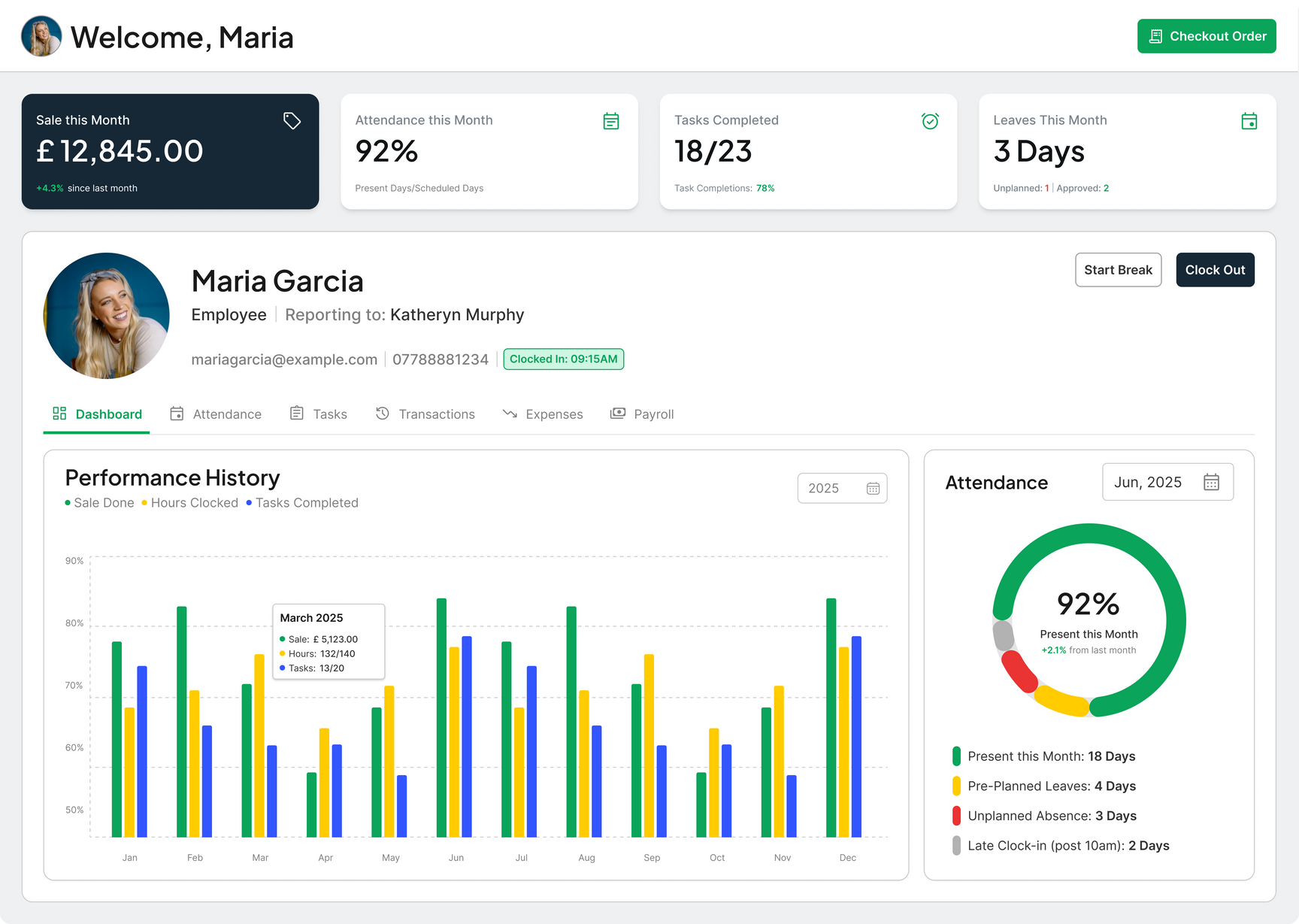
Attendance, tasks, expenses, payroll — designed for daily use, not demos. Mapped the full staff lifecycle and permission model, unified navigation, modal, and form patterns across every flow. Validated with internal teams: 35% faster navigation. These portals became the RBAC foundation adopted platform-wide.
↑ 60%
task completion